Friday, 21 September 2012

The Four Sacred Months

Welcome to month of Dhul Qa'dah, one of the four 'Shahr-ul-Haram' - Sacred Months. 

The four sacred months are Muharram, Rajab, Dhul Qa'dah and Dhul Hijjah. In these months, the reward for good deeds is multiplied; and though committing sins is forbidden at all times, it is even more forbidden during these months.

Allah (SWT) says in the Qur'an:
إِنَّ عِدَّةَ الشُّهُورِ عِندَ اللَّهِ اثْنَا عَشَرَ شَهْراً فِي كِتَـبِ اللَّهِ يَوْمَ خَلَقَ السَّمَوَت وَالاٌّرْضَ مِنْهَآ أَرْبَعَةٌ حُرُمٌ ذلِكَ الدِّينُ الْقَيِّمُ فَلاَ تَظْلِمُواْ فِيهِنَّ أَنفُسَكُمْ وَقَاتِلُواْ الْمُشْرِكِينَ كَآفَّةً كَمَا يُقَـتِلُونَكُمْ كَآفَّةً وَاعْلَمُواْ أَنَّ اللَّهَ مَعَ الْمُتَّقِينَ
“Verily, the number of months with Allah is twelve months (in a year), so was it ordained by Allah on the Day when He created the heavens and the earth; of them four are sacred. That is the right religion, so wrong not yourselves therein, and fight against the Mushrikin idolaters collectively as they fight against you collectively. But know that Allah is with those who have Taqwa.” [Surah at-Taubah: 36]

The ayah refers to these four sacred months. We should pay attention to their sanctity, because Allah has singled them out for a special status and has forbidden us to commit sins out of respect for their sanctity, for sins committed at this time are even worse.

Al-Bukhaari (4662) and Muslim (1679) narrated from Abu Bakr that the Prophet (peace be upon him) said: “The year is twelve months, of which four are sacred: three consecutive months, Dhu’l-Qa’dah, Dhu’l-Hijjah and Muharram, and Rajab Mudar which comes between Jumaada and Sha’baan."


Wednesday, 12 September 2012

Brotherhood And Sisterhood In Islam

As a yardstick and criterion in our lives, Islam has given us a clear definition of unity and brotherhood and how it can be realized and implemented.  The uniting factor is the `Aqeedah (creed) of Islam which defines the belief of a Muslim.  Unlike other bonds (nationalistic, patriotism, etc.) which are superficial, animalistic, reactive, emotional, and completely devoid of a real solution for life’s affairs, the intellectuality of the ideological bond of Islam unites man irrespective of their race, nationality, colour, status and other factors which are irrelevant when it comes to bonding on an ideological creed.


Allah (SWT) says in the Qur'an: 
إِنَّمَا الْمُؤْمِنُونَ إِخْوَةٌ
"The Mu’minoon (believers) are but a single Brotherhood."
[Surah Al-Hujuraat: 10]


And then again:
وَالْمُؤْمِنُونَ وَالْمُؤْمِنَـتِ بَعْضُهُمْ أَوْلِيَآءُ بَعْضٍ يَأْمُرُونَ بِالْمَعْرُوفِ وَيَنْهَوْنَ عَنِ الْمُنْكَرِ وَيُقِيمُونَ الصَّلَوةَ وَيُؤْتُونَ الزَّكَوةَ وَيُطِيعُونَ اللَّهَ وَرَسُولَهُ أُوْلَـئِكَ سَيَرْحَمُهُمُ اللَّهُ إِنَّ اللَّهَ عَزِيزٌ حَكِيمٌ
The believers, men and women, are supporters of one another; they enjoin good, and forbid evil; they perform the Salah, and give the Zakah, and obey Allah and His Messenger. Allah will have His mercy on them. Surely, Allah is All-Mighty, All-Wise.
[Surah At-Taubah: 71]


Brothers and sisters in Islam share the same beliefs and religious identity. They work towards the same goals, and share the same code of behaviour. The Qur'an says:

وَأَلَّفَ بَيْنَ قُلُوبِهِمْ لَوْ أَنفَقْتَ مَا فِى الاٌّرْضِ جَمِيعاً مَّآ أَلَّفْتَ بَيْنَ قُلُوبِهِمْ وَلَـكِنَّ اللَّهَ أَلَّفَ بَيْنَهُمْ إِنَّهُ عَزِيزٌ حَكِيمٌ
And He has united their (believers') hearts. If you had spent all that is in the earth, you could not have united their hearts, but Allah has united them. Certainly He is All-Mighty, All-Wise.

Brotherhood/Sisterhood must be established purely for the sake of Allah (SWT). This requires the brothers to abandon any type of personal interest that they might hope to gain through their relationship. Prophet Muhammad (peace be upon him) once said: 
"A man set out to visit one of his brothers for the sake of Allah and Allah (SWT) appointed an angel to watch over him.
The angel asked the man, 'Where are you going?'
The man replied: 'I wish to visit my brother.'
'Do you need anything from him?' asked the angel.
'No,' replied the man. 
'Then why are you going to visit him?' inquired the angel. 
The man answered, 'I love him for Allah's Sake.' 
The angel said, 'Then know that Allah has sent me to tell you that Allah loves you because of your love for your brother and that He has decreed Paradise for you'." 
(Sahih Muslim)

One of the first steps towards building an Islamic community is to create an atmosphere of unity. Through the guidance of Allah (SWT), the Prophet (peace be upon him) established a bond of brotherhood between the Ansar and the Muhajireen, and he said:

"You will not be a believer until you love for your brother what you love for yourself." [Al- Bukhari]

And he said:
"You will not enter Paradise until you believe, and you will not believe until you love one another." [Muslim]


The Rights Of Our Brothers And Sisters

Allah (SWT) says in the Qur'an:
يأَيُّهَا الَّذِينَ ءَامَنُواْ لاَ يَسْخَرْ قَوْمٌ مِّن قَوْمٍ عَسَى أَن يَكُونُواْ خَيْراً مِّنْهُمْ وَلاَ نِسَآءٌ مِّن نِّسَآءٍ عَسَى أَن يَكُنَّ خَيْراً مِّنْهُنَّ وَلاَ تَلْمِزُواْ أَنفُسَكُمْ وَلاَ 
تَنَابَزُواْ بِالاٌّلْقَـبِ بِئْسَ الاسْمُ الْفُسُوقُ بَعْدَ الايمَانِ وَمَن لَّمْ يَتُبْ فَأُوْلَـئِكَ هُمُ الظَّـلِمُونَ
"O you who believe! Let not a group scoff at another group, it may be that the latter are better than the former. Nor let (some) women scoff at other women, it may be that the latter are better than the former. Nor defame yourselves, nor insult one another by nicknames. Evil is the name of wickedness after faith. And whosoever does not repent, then such are indeed wrongdoers."

يأَيُّهَا الَّذِينَ ءَامَنُواْ اجْتَنِبُواْ كَثِيراً مِّنَ الظَّنِّ إِنَّ بَعْضَ الظَّنِّ إِثْمٌ وَلاَ تَجَسَّسُواْ وَلاَ يَغْتَب بَّعْضُكُم بَعْضاً أَيُحِبُّ أَحَدُكُمْ أَن يَأْكُلَ لَحْمَ أَخِيهِ مَيْتاً فَكَرِهْتُمُوهُ وَاتَّقُواْ اللَّهَ إِنَّ اللَّهَ تَوَّابٌ رَّحِيم
"O you who believe! Avoid much suspicion; indeed some suspicion is sin. And spy not, neither backbite one another. Would one of you like to eat the flesh of his dead brother You would hate it. And have Taqwa of Allah. Verily, Allah is the One Who forgives and accepts repentance, Most Merciful."
[Surah Al-Hujuraat: 11-12]


The rules are simple as laid out by these two ayahs:
1. Do not ridicule other people.
2. Do not insult or call each other names.
3. Avoid much assumption (negative assumption).
4. Do not spy on each other.
5. Do not back bite one another.


Our love for our Muslims brothers and sisters should extend beyond mere feelings. It should be apparent in our actions:
1. Dealing gently with them.
2.Guard your brothers' secrets.
3. Keeping our promises to them.
4. Visiting them when they are ill.
5. Making Dua'a for them in their absence.
6. Smiling at you brothers and sisters.
7. Staying by their side during their good and bad times.

Allah's Messenger (peace be upon him) said, "The example of the believer in their affection, mercy and sympathy for one another is like that of the body; when on of its organs complains, the rest of the body responds to it in wakefulness and fever." [Muslim]

8. Showing affection and friendliness towards them.
9. Giving them the benefit of doubt.

Hamdun al-Qassar, one of the great early Muslims said, “If a friend among your friends errs, make seventy excuses for them. If your hearts are unable to do this, then know that the shortcoming is in your own selves.” [Imam Bayhaqi, Shu`ab al-Iman, 7.522]

10. Become aware of their problems to assist them where necessary.

Our Prophet (peace be upon him) said, "Whoever relieves a believer of a distress from the distresses of this world, Allah will relieve him of a distress from the distresses of the Day of Judgement. And whoever facilitates [a matter] for one in financial difficulty, Allah will facilitate for him [matters] in this world and the Hereafter. And whoever covers [the fault of] a Muslim, Allah will cover his [faults] in this world and the Hereafter. Allah is in aid of [His] servant as long as the servant is in aid of his brother." [Muslim]

It is unlawful to hold our brothers and sisters in disrespect because of some sin they may have committed in the past, for perhaps they may have repented and will repent in the future and be forgiven by Allah (SWT), while the one who looks down on her will not be forgiven for her self-righteous attitude.


The Prophet (peace be upon him) warned: 
"No one who had in his heart, an atom's weight oof pride would enter Paradise."
(Muslim and At-Tirmidhi]

As soon as the new brother or sister enters Islam, their past is over and forgiven by Allah (SWT), and they are equal to all other Muslims in  status, duties and rights. And their first right is to be taught everything they need to know about Islam in the best possible manner.


If we want to regain our lost glory we should forget our self-made differences and be united as we are being directed by Allah (SWT) in the Holy Quran:

وَاعْتَصِمُواْ بِحَبْلِ اللَّهِ جَمِيعاً وَلاَ تَفَرَّقُواْ وَاذْكُرُواْ نِعْمَةَ اللَّهِ عَلَيْكُمْ إِذْ كُنتُم أَعْدَآءً فَأَلَّفَ بَيْنَ قُلُوبِكُمْ فَأَصْبَحْتُم بِنِعْمَتِهِ إِخْوَاناً وَكُنتُمْ عَلَى شَفَا حُفْرَةٍ مِّنَ النَّارِ فَأَنقَذَكُمْ مِّنْهَا كَذلِكَ يُبَيِّنُ اللَّهُ لَكُمْ ءَايَـتِهِ لَعَلَّكُمْ تَهْتَدُونَ
“And hold fast, all together, by the rope which Allah (stretches out for you) and be not divided among yourselves; and remember with gratitude Allah’s favour on you for you were enemies and he joined your hearts in love, so that by his grace, ye become brothers; and ye were on the brink of the pit of fire, and He saved you from it”. 
[Al Imran : 103]

May Allah (SWT) help us to establish the true spirit of brotherhood by forgetting our so-called differences. It is only possible if we act upon the teachings of the Qur'an and Sunnah of the Prophet (peace be upon him). Let us step forward to promote ‘Islamic concept of brotherhood and sisterhood’ throughout the world. The world will InShaAllah be changed into a better place; where the differences of colour, language, race and nationality will vanish. May Allah guide us all to the straight path. Ameen!

Sunday, 2 September 2012

Surah al-Kawthar (108)

This Surah was revealed in Makkah, and named (Sūrat ul-Kawthar) in the book of at-Tirmidhi, and (Innā a`ṭaynāka-Kawathar) in Sahīh al-Bukhāri. 

Cause f Revelation:
Al-Wāḥidi collected a Hadith from Ibn `Abbās that al-`Ᾱṣ bin Wā’il met the Prophet at the gate of Bani Sahm of the Sacred House of Makkah, and spoke to him while the Quraysh chiefs were assembling at the Ka`bah. Then when al-`Ᾱṣ went to meet them they asked him, “Who were you talking to?” He replied, “To that one, al-Abtar.”- It was then after the death of the Prophet’s son, `Abdullah, and before him his other son al-Qᾱsim. 

Reason for Revelation:
This Sūrah was revealed to comfort the Prophet (peace be upon him) and assure him of the abundant good [al-Kawthar] that Allāh had chosen for him, and the loss awaiting his opponents.
 
Summary of The Sūrah: 
Verse 1: Allah reveals the favor given to His Messenger [i.e., abundant good].
Verse 2: Allah commands His Messenger to be thankful by offering prayers and sacrifice.
Verse 3: Allah condemns the enemies of Allah's Messenger and defends His beloved Messeger. 

Commentary on The Sūrah: 

Ayah 1: إِنَّآ أَعْطَيْنَـكَ الْكَوْثَرَ
Surely, We have granted you [O Muhammad] al-Kawthar.
نَا + إِنَّ = إِنَّا: Surely, We. 
أَعْطَيْنَاكَ: The pronoun إنَّا occurred before the verb أعطيناك for two reasons:
- Drawing attention.
- Showing exclusiveness.                                                                                 
‘We’: is an expression of glorification most appropriate to Allāh, to show the grandness of His gift to His Messenger.
آتى - إيتاء- to give, but not absolute [e.g., You give someone something which you can take back]. Allah says, “تُؤْتِي الْمُلْكَ مَن تَشَاءُ وَتَنزِعُ الْمُلْكَ مِمَّن تَشَاءُ” – “You give sovereignty to whom You will and You take sovereignty away from whom You will…”  
ايتاء also implies something can be given with a condition of responsibility, i.e. Allah gives sovereignty to people with a duty of responsibility of ruling in justice.
Allah is saying to His Messenger: I have given you a lot of gifts, so enjoy them. They won't be taken away from you.
The verb is made in the past tense to imply Certainty, assurance and signify Completion: it shows that the favour granted to the Prophet is guaranteed and completed. 
الكَوْثَر: Literally means the most abundant good. 
It is an intensive form of noun, derived from كـَثْرَة 
It is placed in contrast to the word al-abtar to annul its reference to Muhammad. 
Narrations regarding al-Kawthar;
Anas nararted, "While we were with the Messenger of Allah in the Masjid, he dozed off into a slumber. Then he lifted his head smiling. We said, “O Messenger of Allah! What has caused you to laugh?” He said, “Indeed, a sūrah has been revealed to me.” And he recited, “Verily, We have granted you Al-Kawthar. Therefore turn in prayer to your Lord and sacrifice. For he who hates you, he will be cut off.” Then he asked, “Do you know what Al-Kawthar is?” We said, “Allah and His Messenger know best.” He said, “Indeed, it is a river that my Lord has promised me and it has abundant goodness. It is a pond where to my Ummah will be brought on the Day of Judgment. Its containers are as numerous as the stars in the sky. Then a servant of Allah from among them will be (prevented from it) and I will say: "O Lord! Verily, he is from my Ummah (followers).'' Then He (Allah) will say: "Indeed, you do not know what he introduced (or innovated) after you.''  
Imam Ahmad also recorded from Anas that the Messenger of Allah said,
“I entered Paradise and I came to a river whose banks had tents are made of pearls. So I dipped my hand into its flowing water and found that it was the strongest (smell) of musk. So I asked, "O Jibril! What is this'' He replied, "This is Al-Kawthar which Allah has given you.''  
Ahmad recorded from Anas that a man said, "O Messenger of Allah! What is Al-Kawthar'' He replied, “It is a river in Paradise which my Lord has given me. It is whiter than milk and sweeter than honey.” 
Imam Ahmad recorded from Ibn `Umar that the Messenger of Allah said, “Al-Kawthar is a river in Paradise whose banks are of gold and it runs over pearls. Its water is whiter than milk and sweeter than honey.” 
The definite article in (الكوثر) is significant; for it illustrates that the river of al-Kawthar is one of the abundant good that will be granted to the Messenger, different good things, which includes what has been mentioned in the two sūrahs (93 & 94)
Ash-Shawkāni and al Alūsi mentioned additional blessings granted to the Prophet: 
- Allah gave him the best charater, He said, “And indeed, you are of a great moral character."  
- He gave him Prophethood and Messengership - carrying the final Book and Words of Allah to mankind up till the Day of Judgment.
- He also said, “And We have not sent you, [O Muhammad], except as a mercy to the worlds.”  
- The Qur'an - the final Miracle: Muhammad was given a miracle to hear -the Qur'an miracle is for all times and all peoples.
- Justice and Victory: Allah gave His Messenger justice that which people are hungry for around the world.
- Allah gave him victory that which was nevr given to any other Messengers. 
Allah gave him honors of: 
- Changing the Qibla from Masjid al Aqsa to al Ka'ba:
- Granted him al-Maqāmul-Mahmūd the Praised rank. 
“And from [part of] the night, pray with it as additional [worship] for you; it is expected that your Lord will resurrect you to a praised station.”  
Ibn Kathir, says when commenting on this ayah: (The Messenger of Allah will have honors on the Day of Resurrection, in which no one else will have a share; honors which will not be matched by anyone else. He is the first one for whom the earth will be opened and he will come forth riding to the gathering place. He will have a banner under which Adam and everyone else will gather, and he will have the pond to which no one else will have more access than he. He will have the right of the intercession with Allah when He will come to judge among His creation.)
- Allah gave him followers who are unparalleled in history. 
The Messenger left nothing behind except men - his companions and those who followed them - who would change the world for the better.
- Allah promised to support His Messenger, even if no-one else supported him: “If you do not aid the Prophet - Allah has already aided him”.  
- He made His final Messenger's Nation follow the Middle [wasatt] Path:
“And thus we have made you a just community that you will be witnesses over the people and the Messenger will be a witness over you.” 
- He will have the most followers on Judgment Day. The Messenger of Allah said: “There has never been any Prophet who was not given that which would make people believe in him. What I have been given is revelation which Allah revealed to me, and I hope that I will have the most followers among them.”
- His blessed family is honored - We pray; Allahumma sali 'ala Muhammad wa 'ala aali Muhammadin (Oh Allah, send peace and blessings upon Muhammad, and the family of Muhammad).
- The five prayers are made equal to fifty prayers in reward.
- The Qur’an is made easy to memorize and remember: the Qur'an is primarily preserved by Allah making it easy to remember. “And We have certainly made the Qur'an easy for remembrance, so is there any who will remember?”  Allah also says; “Indeed, it is We who sent down the Qur'an and indeed, We will be its guardian.” 
        These are the gifts that Allah has given him. How is he supposed to thank Allah, then? How is he supposed to pay this? Allah says; “so pray…”
The first sign of gratefulness to Allah is prayer and sacrifice.
The prayer is a gift from Allah and a great sign of our gratefulness to Him for all His favors on us. That is why it will be the first thing to be asked about on the Judgment Day.
This surah is a lesson for the caller to Islam that no matter how hard the bad times might be; look at the great reward Allah will give you.
How are we supposed to deal with painful losses? 
To remember that He has given us a lot, and then to pray to Him devotedly.

Ayah 2: فَصَلِّ لِرَبِّكَ وَانْحَرْ
So pray to your Lord and sacrifice [to Him alone].
Salāh is the best method of showing gratitude to Allah for His too many favors and blessings, and to glorify Him as He deserves. The Prophet had to derive from his Lord the needed strength and courage to carry on spreading the message. Also, salāh is recommended because it is something disliked by the opponents of Muhammad. Allah mentions (prayer) instead of (thankfulness) so that we understand that prayers are the most comprehensive and complete way of giving thanks to Allah.
to your Lord: The addressing pronoun [ka ك] is connected to the word [rab رب] to refer to the honorable position the Prophet received with his Lord, it implies that Allah is caring for him and loving him, which was a great source of relief for him ().
Nahr: literally means: that part which is above the chest. Allah specifically mentions this word, which is similar to the legacy of Ibraheem.

Ayah 3: إِنَّ شَانِئَكَ هُوَ الاٌّبْتَرُ 
Indeed, your enemy is the one cut off.
[شَانِئْ shaani’] is a term derived from [شَنَاءَة shanā’ah,] which means hatred.
The Quraysh were blinded by their enmity towards the Prophet (). They brought false accusations against him. They taunted him and scoffed him in every possible way. So Allah is telling them; no doubt you will be cut off. Allāh casts His anger upon them by restricting the quality of al-abtar to he who sets himself an enemy of His Messenger. He is the one cut off [from all good in this world and the Hereafter].
'He' signifies that it is not the Messenger of Allah who is cut off, rather your enemy [O Muhammad] is being cut off.
They thought that Allah's Messenger would die soon and his legacy will vanish, because he had no sons. But in fact every generation of believers curse the enemies of Allah's Messenger, and the legacy of Muhammad is in the unique one which no one else has ever had; all those who believed and every single Muslim child born is part of his progeny. A person might be Chinese, African, Indian, white, Arab or non-Arab - he will love Muhammad more than he loves his own child, father or even his own self. All will take pride in saying; لاإله إلا الله محمد رسول الله
Al-abtar: describes someone who fails to achieve his object, who is deprived of all means of success, and who has no male child to succeed him.
Using the noun al-abtar indicates permanency. So this enemy, being cut off, isn't just referring to a temporary enemy of Allah's Messenger. Rather, it refers to an enemy of all times. Anyone who hates Allah's Messenger with severe enmity will be cut off. 

Monday, 27 August 2012

Fasting In Shawwal

It's been over a week since Eid is over. Hopefully you all had a relaxing and an enjoyable break. Eid along with a wedding function for a friend gave me an added reason to enjoy and celebrate.

Now that I am well rested and back to routine, I am planning on keeping the six Shawwal fasts.


Fasting six days of Shawwal after the obligatory fast of Ramadan is Sunnah Mustahabbah. It is recommended for the Muslim to fast six days of Shawwal, and in this there is great virtue and an immense reward. Whoever fasts these six days will have recorded for him a reward as if he had fasted a whole year, as was reported in a Saheeh Hadith from the Prophet (peace and blessings of Allah be upon him). 

Abu Ayyoob (may Allah be pleased with him) reported
that the Messenger of Allah (peace and blessings of Allah be upon him) said: 
Whoever fasts Ramadan and follows it with six days of Shawwal, it will be as if he fasted for a lifetime.”
(Narrated by Muslim, Abu Dawood, al-Tirmidhi, al-Nisaa’i and Ibn Maajah).

The Prophet (peace and blessings of Allah be upon him) explained this when he said: “Whoever fasts for six days after Eid ul-Fitr has completed the year: (whoever does a good deed (hasanah) will have ten hasanah like it).” According to another report: “Allah has made for each hasanah ten like it, so a month is like fasting ten months, and fasting six days completes the year.” (al-Nisaa’i and Ibn Maajah). 

It was also narrated by Ibn Khuzaymah with the wording: 
“Fasting for the month of Ramadan brings the reward of ten like it, 
and fasting for six days brings the reward of two months, 
and that is the fasting of the whole year.”

The Hanbali and Shaafa’i fuqaha’ explained that fasting six days of Shawwal after fasting Ramadan makes it as if one has fasted for an entire year of obligatory fasts, because the multiplication of the reward applies even to naafil fasts, because each hasanah brings the reward of ten like it.


Another of the important benefits of fasting six days of Shawwal is that is makes up for any shortfall in a person's obligatory Ramadan fasts, because no one is free of shortcomings or sins that have a negative effect on his fasting. On the Day of Resurrection, some of his naafil deeds will be taken to make up the shortcomings in his obligatory deeds, as the Prophet (peace and blessings of Allah be upon him) said:

“The first thing for which people will be brought to account on the Day of Resurrection will be their salaah (prayer). Our Lord, may He be glorified and exalted, will say to His angels – although He knows best – ‘Look at the salaah of My slave, whether it is complete or incomplete.’ If it is perfect, it will be recorded as perfect, and if something is lacking, He will say, ‘Look and see whether My slave did any voluntary (naafil) prayers.’ If he did some voluntary prayers, [Allah] will say, complete the obligatory actions of My slave from his voluntary actions.’ Then all his actions will be dealt with in a similar manner.” (Narrated by Abu Dawood).

Thursday, 23 August 2012

I Am Not A Muslim, But Ramadan Changed Me

Below is an article I came across on HuffingtonPost.com. How blessed Ramadan is can truly be understand by reading this article. This lady has not yet reverted to Islam, but she is absolutely fascinated by Ramadan and Muslims' actions during the month. SubhanAllah!

Here's the article:

My apartment is located in between three of the area's most frequented bars. At 3 a.m. on a Sunday, I can hear the remainder of Saturday night's revelers as they pass my window; singing, chatting and shouting under the street lights. I've never been much of a party girl, yet I can relate more easily to the 3 a.m. scene outside my window than the one I find myself facing inside. It is 3 a.m. and I'm alone at my kitchen table, eating porridge in the dark. My mini-Ramadan began with a lonely breakfast accompanied by the drunken songs of strangers on the street below.

As Ramadan drew to a close this weekend, many Muslims around the world reflected on the month that passed. I am not a Muslim and won't be actively celebrating Eid this week. Yet I have been reflecting on my own experiences this month. I too have learned a great deal.

I had never really fasted before. I grew up as a Roman Catholic and as a child I'd unwilling give-up crisps or biscuits as a token gesture during Lent. Today I self-identify as a Liberal Quaker and there is no specified imperative compelling me to fast as part of my community's religious experience. As an interfaith activist I have encountered friends from a number of different faiths quietly, humbly abstaining from food and drink. Watching my friends fasting, often whilst they are working and during the long summer days, I have felt a sense of wonder and to be honest, confusion. I found it hard to imagine that going without food could bring me closer to God. Surely it would only make me distracted, grumpy and hungry. This Ramadan, I decided that an experience of fasting was long-overdue. Maybe it was possible for me, a food-loving, non-Muslim, to learn something by taking part in this important Islamic month. But thirty days? You must be joking. I was determined to try at least three.

Sunday, July 29, marked the solemn Jewish holy day Tisha B'Av, a day when many Jewish people fast. This seemed an appropriate day to begin my own fast since I was traveling with a Jewish friend to an interfaith Iftar that evening. My friend explained that in the Jewish tradition, fasting can take on different meanings and purposes depending on the occasion of the fast. A fast might make you feel discomfort as a way of relating to the suffering of ancestors or at other times, eating could be a distraction from the spiritual and therefore it is better to go without food. I listened with genuine interest and tried to understand, but by the end of that day, as I took the first bite of a juicy date, I couldn't quite comprehend that my discomfort had made me feel any closer to the divine. As I prayed later that evening, however, something strange began to emerge. My hungry conscious self did not anticipate subconscious ramblings expressing feelings of gratitude and happiness. I felt blessed for the day, in spite of myself.

Staying with a dear friend for the next two days, I tried to fit into her Ramadan routine. Prayer soon became far more regular than I'd ever known, not to mention it acted as a good distraction from thoughts of food. Going to the mosque each evening, I sat at the back in quiet contemplation, glancing toward my Muslims sisters' as they bowed and prostrated, whilst listening to extracts of the Quran in Arabic; I could little understand it, yet still I recognized its beauty. One thing I love about Islam is that it is a religion deeply rooted in and centered on praying. During Ramadan this is strengthened, as Muslims try to spend more time at the mosque, joining together as a community for the night prayers.

Community is certainly an element of Ramadan that uplifted me. Sharing in the fast with my friend and her family made me quickly feel like part of this small community, not to mention the trips we made to the homes of extended family and the sharing of food at the mosque on my final day of fasting. One reason that I chose to fast during Ramadan in particular, is because in my experience, of all the world religions, Islam is perhaps the most misunderstood and often misrepresented. Last Autumn, I attended a debate on multiculturalism which very quickly turned in to a tirade against Islam. The first speaker set the tone by telling a story of Muslim school children being denied water on the hottest day of the year during Ramadan. The facts of this story remain unclear yet in my experience the younger siblings of the family were beyond enthusiastic about Ramadan. They were learning to fast gently: one day on, one day off. But they clearly wanted to fast. It felt as if they recognized fasting as sharing in something bigger, something that was uniting the family and the whole community. Certainly, I felt united through shared experience. And it goes without saying that I was welcomed warmly (and not without a certain degree of curiosity) when I was found to be a non-Muslim fasting for Ramadan.

Although I only fasted for three days, the experience has stayed with me, so that even now, weeks later, I am still reflecting on that time. There is much to be learned from Ramadan. Not just about the Muslim community and improving religious literacy, I learned a great deal about myself. I didn't know that I had such strong will power, having given in to the first stomach rumble at the earliest opportunity before the fast. Inspired by my experience, my approach to food and eating has now improved for the better. Perhaps obvious lessons I take away include reasserting self-control and developing increased empathy with those who have no choice but to go without food.

As a result of the conversations I shared and through my limited understanding (after just three days of fasting), I reflected that the reason why Ramadan is so special and potentially so transformative is because of the sustained effort and the notion of focus that this both allows and creates. We might try day in and day out to live our faith, to express our beliefs as best we can through out daily actions, but we are human; we will and we do fail. What is wonderful about Ramadan, I think, is that it is a full month out of 12 where one can become deeply self-reflective, to look back on the efforts of the year that has past and look forward to the year ahead. Of course we can be (and one might argue ought to be) self-reflective at any other time of the year. But perhaps the fasting, the sense of community, the shared experience and the self-control presented during Ramadan offers a much needed helping hand. I know that I could use a helping hand once in a while. So this may have been the first time, but it will not be the last time that this Quaker will be fasting.

Friday, 17 August 2012

Ready For Eid-ul-Fitr?

With Eid ul Fitr just round the corner and the successful culmination of Ramadan fasting, a great sense of excitement and joy rents the air. Homes, streets, parks, malls, mosques and hotels have been spruced up with flowers, plants, perfumes and designer lights for the three-day Eid celebrations.

Thousands of families have been thronging markets across for the past few days: buying new clothes, sweets, greeting cards and gift items for their near and dear ones. Gardens, beach-fronts, amusement parks and other important public places have been cleaned as these places will be bustling with activity during the holidays.

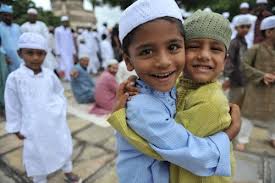
Eid al Fitr, a three-day celebration, is a great institution that embodies Islam’s message of love, peace, unity and security to all. Eid is also a ‘Thanksgiving Day’ because the first thing the faithful Muslims do is to assemble in a brotherly and happy environment for Eid prayers to offer their gratitude to Allah (SWT) for the countless blessings that they enjoy.

Eid brings people together, builds bonds of brotherhood and provides a platform for sharing this happiness with the underprivileged sections of society by way of giving them obligatory charity before proceeding for Eid prayers. The distribution of Fitr (alms) to the poor also constitutes a major part of the Eid activities.

Once the Eid ul Fitr moon is sighted the preparations for the Eid celebrations begin.

Eid ul Fitr prayer is an integral part of Eid, which is worth mentioning. According to the practices of Prophet Muhammad (peace be upon him), Eid Prayers are conducted in open grounds under the open sky. All the Muslims visit the prayer grounds in the morning on this day and recite the Takbir “Allahu Akbar, Allahu Akbar” (which means Allah is the Greatest) just before the prayers are offered.

Soon after the Eid Prayers, a 'Khutba' (Islamic sermon) is delivered. The person reciting the 'Khutba' leads the prayer and is called the 'Khateeb'.


After the prayer and sermon, there is usually a gathering at the Muslims' houses where all their near and dear ones accompany them in the Eid meals. Muslims wish each other Eid Mubarak (Happy Eid). All the children receive gifts as a token of love from all their relatives as Eid is the day to exchange gifts among each other. 
The entire day is marked with the triumph and happiness spread all around. 

Defining Life takes this apportunity to wish all the Muslims round the world a very blessed Eid ul Fitr.


Wednesday, 8 August 2012

Laylatul Qadr And Its Importance

So valuable is this Night of Qadr that the Quran devotes a special surah to it:
لَيْلَةُ الْقَدْرِ خَيْرٌ مِّنْ أَلْفِ شَهْرٍ - “Lailatul Qadr is better than a thousand months!” [Surah -Al- Qadr:3] 
ليلة القدر is commonly translated as 'Night of Decree'.
Allah (SWT) knows everything. He informs His angels what He has decreed for the people for the upcoming year. قدر  also means nobility, honour and dignity. So it’s called (Laylatul-Qadr) because of its greatness and nobility.

It is made unknown which night of Ramadhān it is. Some said it is the twenty seventh of Ramadhān, while others had the view that it is the twenty first, twenty third, twenty fifth or twenty ninth – meaning that it is one of the odd number nights of the last ten nights of Ramadhān. `Ayshah (RA) said that the Prophet (peace be upon him) said, “Look for it in the odd nights of the last ten nights.”

It is not specified in order to help the believers spend more nights in worship and devotion, not remaining content with only one night. And also as Al-Aloosy said: “to remove us from some blame, in comparison to if we knew when the Night of Qadr was, and we become lazy”.

It is not an ordinary night like other nights, but a night in which destinies are made. It marks the revelation of a Book which changed the destiny of not only the Quraysh or Arabia, but of the entire world.

لَيْلَةُ الْقَدْرِ خَيْرٌ مِّنْ أَلْفِ شَهْرٍ: The Night of Decree is better than a thousand months.
ليلة القدر The Night of Decree – this is mentioned (in place of a pronoun) to show how important and majestic this Night is in the sight of Allah (SWT).
The Night of Decree is better than a thousand months: The good acts performed during this night are superior in value to the good acts of a thousand months in which the Night of Decree is not included (which is estimated around 83 years and 4 months). The average lifespan of the Muslim nation is 60 – 70 years. Allah (SWT) is offering us a lifetime full of worship's reward, per every year, within one night time.

Abū Hurayrah (RA) said that the Prophet (peace be upon him) said, “Whoever spends Laylatu-Qadr in prayer, with faith and seeking Allah’s reward, will have whatever proceeds of his sins forgiven.”
(Al-Bukhārī and Muslim)

It is recorded that the Prophet (peace be upon him) mentioned a man from among the children of Israel who set out for Jihād in the cause of Allah (SWT) for one thousand months. When this was mentioned to his companions they were amazed and wished that they too could do the same good deed. Therefore, Allah (SWT) revealed this Sūrah as a mercy and blessing from Him, saying that spending this night in worship is far better than worshipping Allah (SWT) for a thousand months.”

Others said that this خير (better) – refers not just to worship, but also to doing good with others. So if you have broken up with someone (i.e. a relative, a Muslim friend etc.) - then this is the best night to do the good of uniting with them and removing the hard feelings between each other.

This ayah could mean that The Night of Qadr is better than all times. An infinity context is being implied.

`Aayshah (RA) said, “I asked the Prophet; “O Messenger of Allāh! If I observed the Night of Decree what should I say?” He replied, “Say, “O Allāh! You are the Forgiving; You love to forgive, so forgive me.”
"اللهم إنك عفو تحب العفو فاعف عني"

Five things to do on Laylatul Qadr:
1. Recite the Qur'an abundantly.
2. Strive to gain forgiveness.
3. Do much Superogatory Prayers (Nafil).
4. Increase in Dhikr (Rememberance of Allah).
5. Make much Dua'a.

May Allah (SWT) give us the blessing in witnessing and following the Night of Qadr in this year and the upcoming years, and give us love and understanding of the Qur'an, and its implementation. May Allah send peace and blessings upon His Messenger Muhammad (SAW), Ameen!